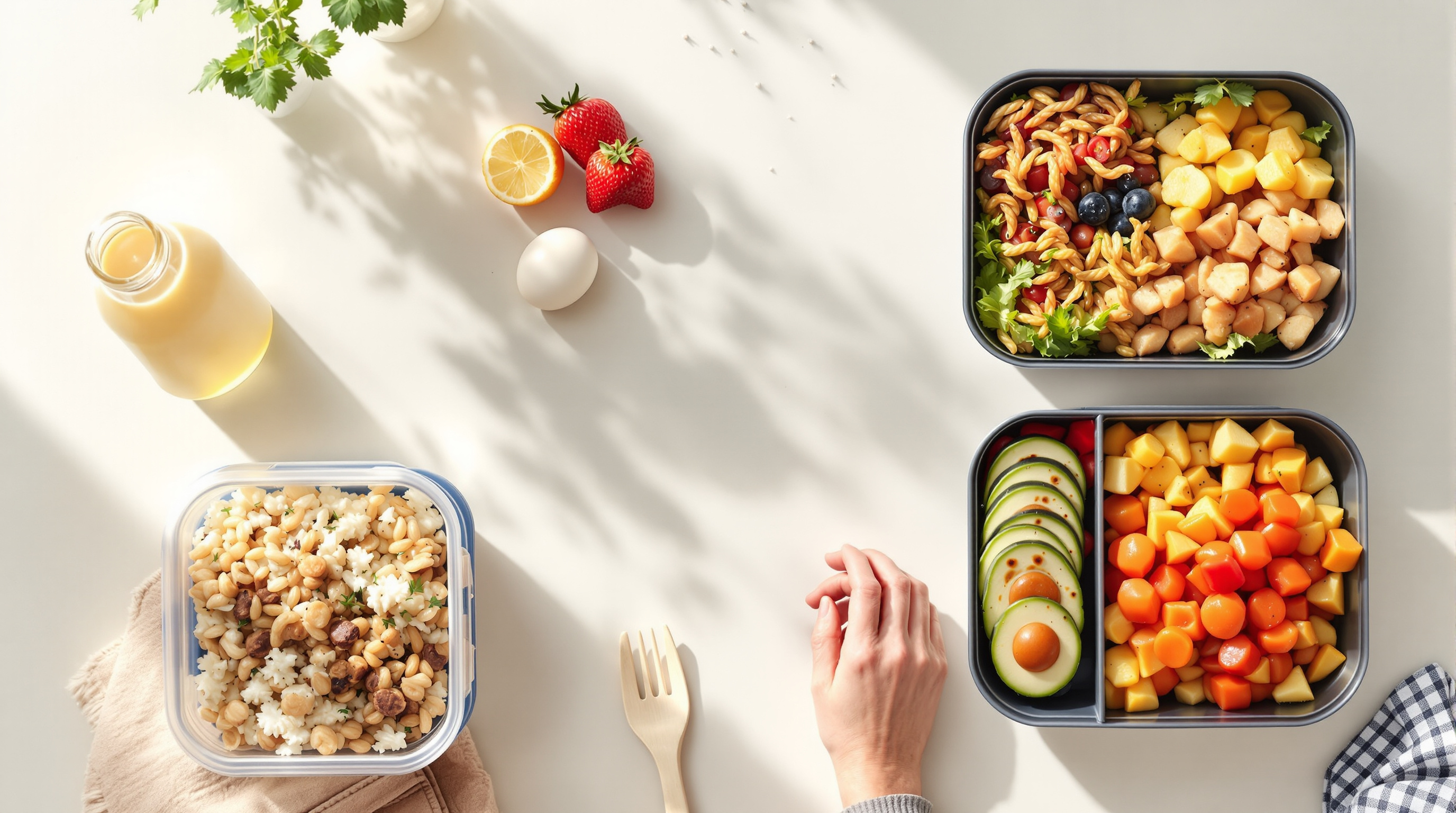
Every weekday, roughly 130 million American adults pack or buy lunch. A significant portion of those meals end up stored in plastic containers — and a growing percentage get reheated in the microwave, still in that plastic. The assumption: if the container says "microwave safe," the food inside is fine.
That assumption is wrong. "Microwave safe" on a plastic container means the container won't deform at microwave temperatures. It says nothing about chemical leaching. A 2023 study published in Environmental Science & Technology found that microwaving plastic food containers releases up to 4.22 million microplastic particles and 2.11 billion nanoplastic particles per square centimeter of container surface. That represents a roughly 2,000x increase over room-temperature storage.
The fix is straightforward: switch to containers made from materials that are chemically inert — meaning they don't react with food, heat, or acids. Stainless steel and borosilicate glass are the two best options. Both have been used in laboratory and medical settings for decades precisely because they do not contaminate their contents.
Why Plastic Lunch Containers Are Worse Than You Think
The problem with plastic lunch containers goes beyond microwaving. Even at room temperature, plastic containers leach detectable levels of BPA, BPS, phthalates, and other endocrine-disrupting compounds into food — especially acidic foods (tomato-based sauces, vinaigrettes), fatty foods (cheese, nuts, dressings), and hot foods.
Scratched, stained, or cloudy plastic containers are the worst offenders. Surface damage creates more exposed surface area for chemical migration, and discoloration typically indicates the plastic matrix has already begun degrading. If a plastic container looks worn, it is actively shedding more particles than when it was new.
Many plastic containers now advertise "BPA-free" — but the replacement chemicals (BPS, BPF, BPAF) have been shown in peer-reviewed research to carry similar endocrine-disrupting effects. A 2020 study in Current Opinion in Endocrine and Metabolic Research found that BPS exhibits estrogenic activity comparable to BPA. Switching to another plastic is not a solution. Switching to a fundamentally different material — glass or stainless steel — is.
For more on microplastics in food packaging and the mechanisms of chemical migration, Plasticproof has a dedicated deep dive.
"The safest container for food is one made from a material that has no chemical interaction with that food. Stainless steel and glass are inert. Plastic is not."
Quick Picks
| Pick | Product | Price | Best For |
|---|---|---|---|
| Best overall | ECOlunchbox Three-in-One | ~$40 | 100% plastic-free bento for daily office use |
| Best compartments | LunchBots Large Trio | ~$40 | Separated sections without dividers shifting |
| Best for microwaving | Bentgo Glass | ~$25 | Reheating lunch at the office |
| Best capacity | Klean Kanteen Meal Box 34oz | ~$45 | Large portion sizes and meal prep |
| Best traditional design | Onyx Stainless Steel 3-Layer Tiffin | ~$35 | Stacking multiple courses, zero plastic |
| Best value set | Glasslock Oven Safe Set (3-pack) | ~$30 | Replacing a full set of plastic containers at once |
Our Top Picks
Best Overall: ECOlunchbox Three-in-One Stainless Steel Bento
Why it made the list: Completely eliminates plastic contact with food. No silicone gaskets, no BPA-free plastic lids — just stainless steel touching food. The trade-off is that it is not fully leak-proof (no gasket means liquids can escape if tipped), so this works best for solid foods, salads, and meals without loose sauces. For those who want zero compromise on material safety, this is the pick.
Best Compartments: LunchBots Large Trio Stainless Steel
Why it made the list: The welded compartments solve a real problem — keeping foods separated without flimsy removable dividers. Ideal for adults who pack varied lunches (grain + protein + vegetables, for example) and want everything in one container. Not fully leak-proof for soupy foods, but excellent for everyday packed lunches.
Best for Microwaving: Bentgo Glass Lunch Container
Why it made the list: This is the pick for anyone who reheats lunch at the office. Remove the lid, microwave the glass body, and there is zero plastic contact with hot food. The borosilicate glass will not shatter from temperature changes. At $25, it is also the most affordable option on this list. The only trade-off: weight. Glass containers are heavier than stainless steel — plan accordingly if commuting by foot or bike.
For a deeper comparison of glass options, see the Plasticproof guide to the best glass food storage containers.
Best Capacity: Klean Kanteen Meal Box 34oz
Why it made the list: The 34oz capacity is meaningful — many stainless steel lunch containers skew small, leaving adults with inadequate portions. The Klean Kanteen Meal Box solves this without being bulky. The silicone-rimmed lid is a practical upgrade over bare metal-on-metal lids, providing enough seal for dressings and moist foods without introducing plastic into the equation.
Best Traditional Design: Onyx Stainless Steel 3-Layer Tiffin
Why it made the list: The tiffin design is brilliant for adults who eat multi-component meals. Three completely separate containers mean a grain, a protein, and a side can be packed without any cross-contamination. The all-metal construction means zero chemical interaction with food. The downside: not leak-proof for liquids (the lids sit on top without gaskets). Works best for drier foods or meals where slight mixing is acceptable.
Best Value Set: Glasslock Oven Safe Container Set (3-Pack)
Why it made the list: At roughly $10 per container, this is the most cost-effective way to replace an entire set of plastic containers at once. The snap-lock lids with silicone gaskets provide genuine leak resistance — something most stainless steel options cannot match. Ideal for meal preppers who make a week's worth of lunches on Sunday and need reliable, stackable, microwave-safe containers.
Stainless Steel vs. Glass: Which Is Right for You?
Both materials are inert and safe. The choice comes down to how you use your lunch container.
Choose stainless steel if:
- You do not need to microwave food at work (or you have access to a ceramic plate for reheating)
- You commute by bike, walk, or public transit and want something lighter and shatter-proof
- You prioritize zero plastic — including lids and gaskets
- You eat mostly room-temperature or cold lunches (salads, grain bowls, sandwiches)
Choose glass if:
- You reheat lunch in the microwave daily
- You need a leak-proof seal for soups, stews, or saucy foods
- You want to see what is inside the container without opening it
- You store meal-prepped food directly in the same container you eat from (fridge to microwave to desk)
Many adults end up with both: stainless steel for daily packed lunches and a glass set for meal-prep storage. This combination eliminates plastic contact entirely across the full food storage and transport workflow.
For those also looking to upgrade food storage bags, see the Plasticproof guide to the best silicone food storage bags.
What About Silicone Lids?
Several of the containers above (Klean Kanteen, Bentgo, Glasslock) use silicone gaskets in their lids. This is a reasonable question: is silicone safe?
Food-grade silicone is a polymer made from silicon (a naturally occurring element — the second most abundant in Earth's crust), oxygen, carbon, and hydrogen. It is chemically distinct from plastic (which is petroleum-derived). Studies to date have not found meaningful leaching from food-grade silicone under normal use conditions, including heating up to 450°F.
Silicone is not perfect — low-quality silicone products can contain fillers. The test: pinch and twist a silicone item. If it turns white at the stress point, it contains fillers. Pure silicone remains its original color when twisted. The silicone gaskets in name-brand containers (Klean Kanteen, Glasslock, Bentgo) are food-grade and filler-free.
The Practical Transition: How to Switch
Replacing every plastic container at once is not necessary. A phased approach works better and costs less:
- Replace containers used for hot food first. Any container that goes in the microwave or holds freshly cooked food should be swapped immediately — heat is the primary driver of microplastic release.
- Replace scratched, stained, or cloudy containers next. Visible wear indicates active material degradation and elevated leaching.
- Replace containers used for acidic or fatty foods. Tomato sauce, vinaigrette, curry, cheese, nuts — these foods accelerate chemical migration from plastic.
- Repurpose remaining plastic containers for non-food storage. Craft supplies, hardware, office supplies. Keeps them out of landfill while removing them from food contact.
For a complete room-by-room approach to removing plastic from the kitchen, see the Kitchen Plastic Detox Guide.
Want the Full Kitchen Swap Checklist?
The Complete Plasticproof Guide covers every kitchen swap — containers, cookware, cutting boards, wraps, and more — with the full research and 80+ product recommendations backed by 47+ peer-reviewed studies.
What to Avoid
Stop Microwaving food in any plastic container
Even "microwave safe" BPA-free plastic releases billions of nanoplastic particles when heated. This is the single highest-exposure behavior for microplastic ingestion through food. Stop today — it costs nothing.
Stop Using scratched or discolored plastic containers for food
Surface damage exponentially increases the leaching rate. If a plastic container has visible wear, it is shedding particles into every meal stored in it. Repurpose it for non-food use or recycle it.
Stop Trusting "BPA-free" as a safety guarantee
BPA-free plastic typically uses BPS, BPF, or BPAF as replacements. These chemicals have shown similar endocrine-disrupting properties in peer-reviewed research. The label is a marketing claim, not a safety certification. The only containers that guarantee zero chemical migration are those made from inert materials: glass, stainless steel, and ceramic.
For adults who also pack lunches in disposable containers, it is worth noting that even paper-based takeout containers often have plastic or PFAS linings. Bringing food from home in a reusable non-toxic container addresses both the chemical exposure and the environmental cost. See Plasticproof's guide to the best plastic-free lunch boxes for additional options including bamboo and bento-style designs.
Frequently Asked Questions
No. The "microwave safe" label on plastic only means the container won't warp or melt at microwave temperatures — it does not mean the plastic won't leach chemicals into food. A 2023 study published in Environmental Science & Technology found that microwaving plastic food containers releases up to 4.22 million microplastic particles and 2.11 billion nanoplastic particles per square centimeter — a roughly 2,000x increase compared to room-temperature storage. Switching to glass or stainless steel containers eliminates this leaching pathway entirely.
Single-wall stainless steel containers (like the ECOlunchbox, LunchBots, and Klean Kanteen Meal Box) do not insulate food — they will reach room temperature within about an hour, similar to plastic containers. For thermal insulation, you would need a double-wall vacuum-insulated container (like a thermos). However, single-wall stainless steel is the better choice for most adult lunch scenarios because it is lighter, more compact, and food-safe without any coating or liner.
Food-grade silicone is generally considered safe. Silicone is a polymer made from silicon (a natural element), oxygen, carbon, and hydrogen — it is chemically distinct from plastic. Studies have not found significant leaching from food-grade silicone under normal use conditions, including heating. The silicone gaskets used on glass container lids (Bentgo, Glasslock) are food-grade and do not come into sustained contact with food contents. They are a far safer sealing option than the PVC gaskets found in some older containers.
Glass lunch containers typically weigh 2–3x more than equivalent-size plastic containers. A standard borosilicate glass container (like the Bentgo Glass) weighs roughly 14–18 oz empty, compared to 4–6 oz for a plastic container of the same capacity. This is the primary trade-off. For commuters who carry lunch in a bag, the weight difference is noticeable but manageable. For those who prioritize weight, stainless steel containers offer a middle ground — roughly 8–12 oz for a full-size lunch container, with zero leaching risk.
No. Metal containers cannot be microwaved — they will cause arcing (sparking) and can damage the microwave. This is the main practical trade-off with stainless steel lunch containers. The workaround: transfer food to a microwave-safe glass or ceramic dish at work before heating. Alternatively, glass lunch containers (like the Bentgo Glass or Glasslock) are fully microwave-safe with the lid removed, making them the better choice if reheating at work is part of your daily routine.
Sources
- Li D, Shi Y, Yang L, et al. "Microplastic release from the degradation of polypropylene feeding bottles during infant formula preparation." Nature Food, 2020.
- Hussain KA, Romanova S, Okur I, et al. "Assessing the Release of Microplastics and Nanoplastics from Plastic Containers and Reusable Food Pouches: Implications for Human Health." Environmental Science & Technology, 2023.
- Pelch KE, et al. "Endocrine-disrupting chemicals (EDCs) in mammals." Current Opinion in Endocrine and Metabolic Research, 2020.
- Rochester JR, Bolden AL. "Bisphenol S and F: A systematic review and comparison of the hormonal activity of bisphenol A substitutes." Environmental Health Perspectives, 2015.
- Jenner LC, et al. "Detection of microplastics in human lung tissue using μFTIR spectroscopy." Environment International, 2022.
- Yang CZ, et al. "Most plastic products release estrogenic chemicals: a potential health problem that can be solved." Environmental Health Perspectives, 2011.
- Cox KD, et al. "Human Consumption of Microplastics." Environmental Science & Technology, 2019.
- World Health Organization. "Microplastics in Drinking Water." WHO Report, 2019.
Protect Every Meal — Not Just Lunch
From the kitchen to the office to the nursery — the Complete Plasticproof Guide covers every swap that matters, backed by 47+ studies and 80+ product recommendations.